Discover What Is Screen Printing and How It Works

Updated: Apr 30
Key Highlights
Here are the key takeaways from our guide to screen printing:
Screen printing is a versatile printing process that uses a mesh screen, ink, and a squeegee to transfer a design onto a surface.
The screen printing process involves creating a stencil on the screen, which allows ink to pass through only in desired areas.
Unlike digital printing, screen printing often requires a separate screen for each color in your design.
This method is known for producing durable, vibrant, and long-lasting screen print designs.
It is particularly cost-effective for large bulk orders with simple, bold graphics.
A wide variety of materials can be printed on, from fabric to wood and even glass.

Introduction: What is screen printing?
Have you ever wondered how your favorite band's t-shirt got its bold, durable design? Chances are, it was made using screen printing. Also known as silk screening, this classic fabric printing technique has been around for centuries and remains incredibly popular for everything from custom apparel to posters. It's a fantastic way to create vibrant, high-quality prints that last.
This guide will walk you through what screen printing is, how it works, and why it might be the perfect choice for your next project.
Exploring Screen Printing: A Comprehensive Overview
So, what exactly is screen printing? At its core, it's a printing process where ink is pushed through a stenciled mesh screen to create a printed design on a surface below. This method, also called silkscreen printing, is one of the most reliable printing methods for achieving bold, rich colors.
To understand its enduring popularity, it helps to look at its origins and how it stands apart from other techniques. Let's explore the history behind this art form and what makes it unique.
Definition and Origins of Screen Printing
Screen printing is a technique that transfers a stenciled design onto a surface using a mesh screen, ink, and a squeegee. The stencil blocks parts of the screen, allowing ink to pass through only in the areas of your design, creating a clean imprint on the material underneath.
This method has a surprisingly long history, with its earliest forms dating back to the Song Dynasty in China around 950 AD. Artisans used it to print patterns onto fabric. The technique, then known as silk screen printing, later made its way to Japan and eventually Europe in the 18th century, though it was initially expensive due to the cost of silk.
As silk became more accessible, traditional screen printing grew in popularity. Modern screens now use polyester, a more affordable fine mesh fabric, but the fundamental principle remains the same. This ancient art form has evolved into a highly effective commercial and artistic printing method used worldwide.
How Screen Printing Differs from Other Printing Techniques
Screen printing stands out from other methods due to its unique process and results. Unlike modern digital printing, which applies all colors at once like an inkjet printer, screen printing lays down each color in a separate, thick layer. This gives the final print a vibrant, tactile quality.
Another popular method is heat transfer printing, where a design is printed on special paper and then applied to the fabric using heat. The key differences lie in how the ink is applied and the final texture.
Here are some key differences:
Durability: Screen printing ink soaks into the fabric, making it more durable than some heat transfers that sit on the surface.
Color Vibrancy: The thick ink layers in screen printing produce exceptionally bold and vibrant colors, especially on dark garments.
Setup: The screen printing process has a more involved setup, making it ideal for bulk orders, whereas digital and heat transfer methods are better for single items or small runs.
Key Steps in the Screen Printing Process
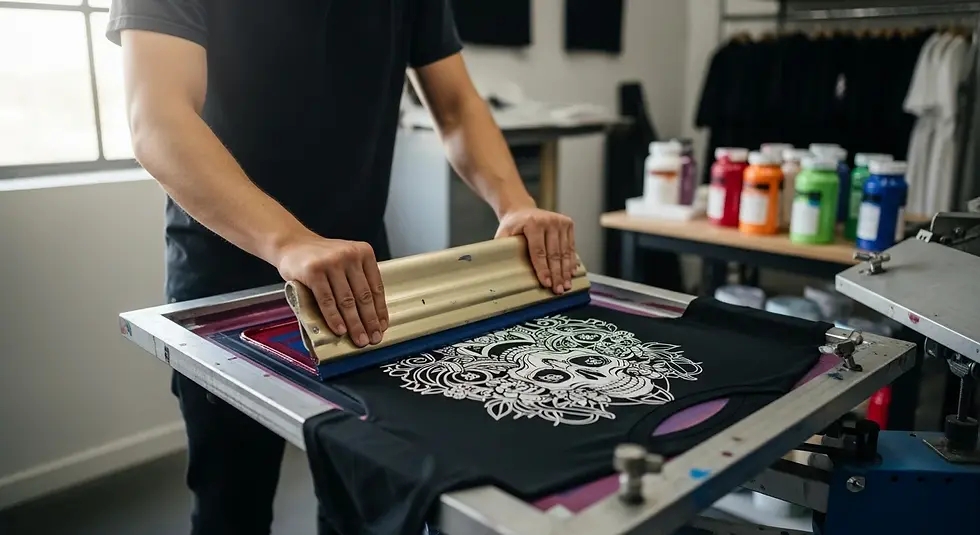
The process of screen printing is a fascinating blend of art and precision. It involves several key stages to get from a digital design to a finished printed product. Each step, from creating the artwork to curing the ink, is crucial for a high-quality outcome.
For designs with multiple colors, the process is repeated using a separate screen for each one. Let's break down the main steps involved in this popular printing method, starting with the initial design.
Designing the Artwork
The first step in any screen printing project is creating the design. This artwork will ultimately be turned into a stencil. To begin, the final design is printed onto a transparent acetate film. This film is essential because it will be used to block light during the screen exposure process.
For designs with multiple colors, the artwork must be separated into individual layers, one for each color. Each color layer is then printed onto its own acetate sheet. This separation is a critical step for creating vibrant designs with sharp, clean lines.
While screen printing is excellent for bold graphics, it can also handle surprisingly intricate designs. Careful preparation of the artwork ensures that even detailed designs are captured accurately in the stencil, leading to a professional-looking final product.
Preparing the Screen and Emulsion
Once the artwork is ready, the next step is to prepare the mesh screen. The screen itself is a frame, typically made of wood or metal, with a fine mesh stretched tightly over it. While originally made of silk thread, modern screens are usually made from more durable and affordable polyester.
The screen printer then coats the mesh with a thin, even layer of a light-sensitive liquid called emulsion. This emulsion is what will eventually create the stencil for the design. Getting a smooth, uniform coating is vital for a high-quality print.
After coating, the screen must be left to dry in a dark room. Any exposure to UV light at this stage could prematurely harden the emulsion, ruining the screen. Once dry, the coated screen is ready for the exposure process.
Exposing and Developing the Stencil
With the dried, emulsion-coated screen and the design on the acetate film, it's time to create the stencil. The acetate film is placed onto the screen, and the entire setup is exposed to a very bright light, typically a specialized UV light source.
The light hardens the emulsion on the parts of the screen that are not covered by the black areas of your design. The design of the film blocks the light, leaving the emulsion beneath it soft and unhardened. This is the magic of the screen printing exposure process.
After exposure, the screen is rinsed with water. The soft, unexposed emulsion washes away, leaving behind a clear stencil within the hardened emulsion. These open areas of the stencil on the fine mesh fabric are where the ink will be pushed through to create the final print.
Applying Ink and Curing the Print
Now for the printing itself. The prepared screen is secured on a printing press, and the item to be printed is placed flat on the board beneath it. The chosen type of ink is poured along the top of the screen. A squeegee is then used to pull the ink firmly and evenly across the stencil.
The ink passes through the open areas of the stencil, transferring the design onto the material. For multi-color designs, this process is repeated with different screens, adding successive layers of ink until the image is complete.
The final and most crucial step is curing. The printed item is passed through a large dryer, which heats the ink to a specific temperature.
Curing ensures the ink bonds permanently with the fabric.
This step makes the final product durable and washable.
Without proper curing, the design would wash out or peel off.
Materials and Equipment Required for Screen Printing
Getting started with screen printing requires a few essential tools and supplies. While you can start with a basic setup, professional printers use specialized equipment to ensure efficiency and quality. The core components include a mesh screen, a squeegee to push the ink, and a printing press to hold everything in place.
From the screen itself to the inks and the printing board, each piece of equipment plays a vital role. Let's look at the essential tools you'll need, the different types of inks available, and the variety of materials you can print on.
Essential Tools: Screens, Squeegee, and Press
To achieve the best results, having the right tools is non-negotiable. The three most fundamental pieces of equipment are the screens, the squeegee, and the screen printing press. Screens are the frames stretched with mesh that hold your stencil. The squeegee is the rubber blade used to push ink through the screen.
The screen printing press is the machine that holds the screen securely above the printing board, ensuring consistent alignment for every print. While simple manual presses are great for hobbyists, commercial shops often use automatic presses for speed and precision, especially for multi-color jobs.
These tools work together to create a clean, professional print. Here is a quick breakdown of their roles:
Tool | Function |
Screens | Holds the stenciled design created with emulsion. |
Squeegee | Pushes ink evenly across the screen and through the stencil. |
Screen Printing Press | Secures the screen and the item for accurate printing. |
Choosing the Right Inks and Supplies
Selecting the correct type of ink is just as important as the printing technique itself. The most common ink is plastisol, which is durable and creates vibrant colors. However, water-based inks are also popular for their softer feel, especially on apparel.
Beyond standard inks, there are specialty options that can add unique flair to your designs. These allow for creative effects that go beyond a simple flat print. Unlike digital inkjet technology, which is limited to CMYK colors, screen printing offers a wider range of possibilities.
Some popular specialty inks include:
Puff inks: These expand under heat to create a raised, 3D texture.
Glitter inks: Metallic flakes are mixed into the ink base for a sparkling effect.
Glow-in-the-dark inks: These inks absorb light and glow in the dark. Choosing the right ink depends on the desired look and the variety of materials you are printing on.
Popular Fabrics and Substrates Used in Screen Printing
One of the greatest advantages of screen printing is its versatility. While it is famous for fabric printing, particularly on cotton T-shirts, it can be used on a wide variety of materials. As long as you use the right ink and technique, you can print on many different surfaces.
Beyond textiles, screen printing is commonly used for posters on a sheet of paper, wooden signs, and even metal or glass products. This flexibility makes it a go-to method for everything from fashion to promotional goods and fine art.
For apparel, certain fabrics work best. Here are some popular choices:
Cotton and cotton blends
Polyester fabrics
Fleece for hoodies and sweatshirts
Canvas for tote bags. The ability to print on various surfaces makes screen printing an incredibly adaptable and valuable technique.
Benefits of Using Screen Printing for Custom Designs

Why do so many people still choose screen printing in an age of advanced digital technology? The answer lies in its unique combination of quality, durability, and cost-effectiveness. A screen print delivers incredibly vibrant colors that pop, especially on dark fabrics, making it a preferred choice for brands that want their designs to stand out.
While the initial setup can be more involved than other methods, the process of screen printing becomes highly efficient for larger orders, resulting in a lower price per item. Let's look closer at the key benefits that make this technique so popular.
Durability and Long-Lasting Results
One of the biggest advantages of a screen print is its exceptional durability. The process involves applying thick layers of ink that penetrate and bond with the fabric fibers. This creates a print that is incredibly resilient and can withstand countless washes without fading, cracking, or peeling.
When properly cured, the ink becomes a permanent part of the garment. This longevity is why screen printing is the industry standard for workwear, team jerseys, and merchandise that is expected to last. You can feel the quality in the final product.
Unlike some other printing methods, where the design simply sits on top of the material, the robust layers of ink in screen printing ensure a long-lasting and professional finish. This focus on durability means your custom designs will look great for years to come.
Vibrant Colors and Creative Possibilities
Screen printing is renowned for producing incredibly vibrant colors. Because the inks are applied in thick, opaque layers, they appear much brighter and more saturated than those from digital printers, especially on dark-colored garments. This makes your designs truly eye-catching.
The creative possibilities extend beyond just a wide range of colors. Screen printing allows for the use of specialty inks that can add unique textures and effects to your designs. This opens up a world of creativity that isn't possible with many other printing methods. Even detailed designs can be printed with sharp clarity.
Some of these special effects include:
Metallic and foil inks for a shiny, reflective finish.
Puff inks that create a raised, 3D effect.
Glow-in-the-dark and UV-reactive inks for fun, surprising elements. These options give you the freedom to create truly original and memorable products.
Cost-Effectiveness for Bulk Orders
When it comes to printing large quantities, screen printing offers excellent cost-effectiveness. While there is an initial setup cost for creating the screens, that cost is spread out over the entire batch. As a result, the price per item drops significantly as the order size increases.
This makes screen printing the ideal choice for bulk orders, such as uniforms for a large company, merchandise for a band, or t-shirts for a major event. The efficiency of the printing process for large quantities allows for a much lower price compared to other methods.
For small runs or one-off prints, methods like digital printing might be more economical due to the lack of setup fees. However, for anyone needing to produce a large volume of items with the same design, screen printing is almost always the most budget-friendly and efficient option.
Common Applications of Screen Printing in California
In California, from bustling cities to laid-back beach towns, screen printing is everywhere you look. It's a cornerstone of the printing industry, used to create everything from custom apparel for startups in Silicon Valley to merchandise for bands playing in Los Angeles. The versatility of a screen print makes it perfect for the state's diverse and creative culture. You'll find it on custom t-shirts, promotional products for local businesses, and even in fine art galleries.
The technique's ability to produce vibrant, durable designs on a wide range of materials makes it a go-to choice for many applications. Fabric printing for fashion brands and creating branded merchandise are two of the most popular uses across the Golden State.
Custom T-Shirts and Apparel
Screen printing is practically synonymous with custom t-shirts, and for good reason. The method produces durable, vibrant prints that hold up well to repeated washing and wearing, making it perfect for clothing items. Whether it's for a local sports team, a school event, or a new clothing brand, screen printing delivers professional-quality results.
The process allows for rich, opaque colors that stand out on any fabric, from light to dark. This makes it ideal for creating bold logos and graphics on a wide range of apparel. The tactile quality of a screen print also adds a premium feel to the garment.
Some common apparel items made with screen printing include:
Graphic tees and hoodies
Team and work uniforms
Tote bags and aprons. The combination of durability and vibrancy makes it the top choice for fabric printing and custom apparel.
Promotional Items and Merchandise
Beyond apparel, screen printing is a powerhouse for creating promotional products. Businesses across California use this method to create branded merchandise that leaves a lasting impression. The durability of the print ensures that a company's logo remains vibrant and intact on items that are used daily.
The versatility of the printing process means it can be adapted for a huge range of promotional items, not just fabric. From tote bags and hats to posters and stickers, screen printing can handle it all. This makes it an incredibly effective tool for marketing and brand building.
Popular promotional products made with screen printing include:
Canvas tote bags
Custom posters and banners
Branded hats and caps. This wide applicability makes screen printing an essential service for any business looking to boost its visibility.
Conclusion
In conclusion, screen printing stands out as a versatile and efficient method for bringing your custom designs to life. With its rich history and ability to produce vibrant colors and durable prints, it’s no wonder that businesses in California are leveraging this technique for their promotional needs. Whether you’re creating custom apparel or unique merchandise, understanding the screen printing process can significantly benefit your brand.
If you’re ready to enhance your brand through custom Screen Printing Services in Tracy, CA, get in touch with Merlin Graphics C&C Design today!
Call - (925) 895-4478
Screen Printing FAQ
Why is screen printing ideal for custom t-shirts?
Screen printing is perfect for custom t-shirts because it produces incredibly vibrant colors that are also very durable. The ink bonds with the fabric, ensuring the design won't crack or fade after many washes. While it may require a separate screen for each color, the quality of clothing items is unmatched.
What are the advantages of screen printing over digital printing?
The main advantages of screen printing over digital printing are its color vibrancy and durability, especially on dark fabrics. It's also more cost-effective for large bulk orders. While the printing process differs, the key differences make it a superior choice for bold designs meant to last.
Which materials can be used with screen printing?
Screen printing is incredibly versatile and works on a wide variety of materials. Beyond standard fabric printing on cotton and polyester fabrics, it can be used on various surfaces like paper, wood, metal, and glass. This flexibility makes it suitable for many different projects and products.
Enhance Your Brand with Merlin Graphics C&C Design
If you’re ready to enhance your brand through custom screen printing, look no further. We create vibrant designs that make a statement. As a preferred choice in the printing industry, we turn your vision into high-quality custom designs that stand out.
Screen Printing Services for Tracy, CA Businesses
For businesses in Tracy, CA, our screen printing services offer the perfect solution for your branding needs. Using a professional screen printing press and printing board, we ensure every final product meets the highest standards in the printing industry. Let us help your business make a lasting impression.


